product design for We Share Trust
July 2024 → December 2024
BtoB Saas
collab. Product Manager, Engeneering team
Context
We Share Trust is a French start-up that makes e-commerce leaders products available to a panel of voluntary consumers who have chosen to comply with the requirements of an independent test.
Testers deliver authentic reviews deeply checked by the WeShareTrust teams prior to moderation.
The client contacted me to help conceiving a moderation reviews software capable to effectively answer business requirements and users needs.
Key challenges
- Integrating into a young, evolving company culture: product function still being structured.
- Defining the product scope from scratch: establishing core workflows and priorities.
- Complex moderation workflows: handling varied scenarios efficiently.
- Usability and accessibility: designing an intuitive tool for diverse users.
- Scalability and future growth: building modular, reusable components.
- Stakeholder alignment: translating legal and operational requirements into design.
- AFNOR compliance: ensuring user data handling meets consumer rights standards.
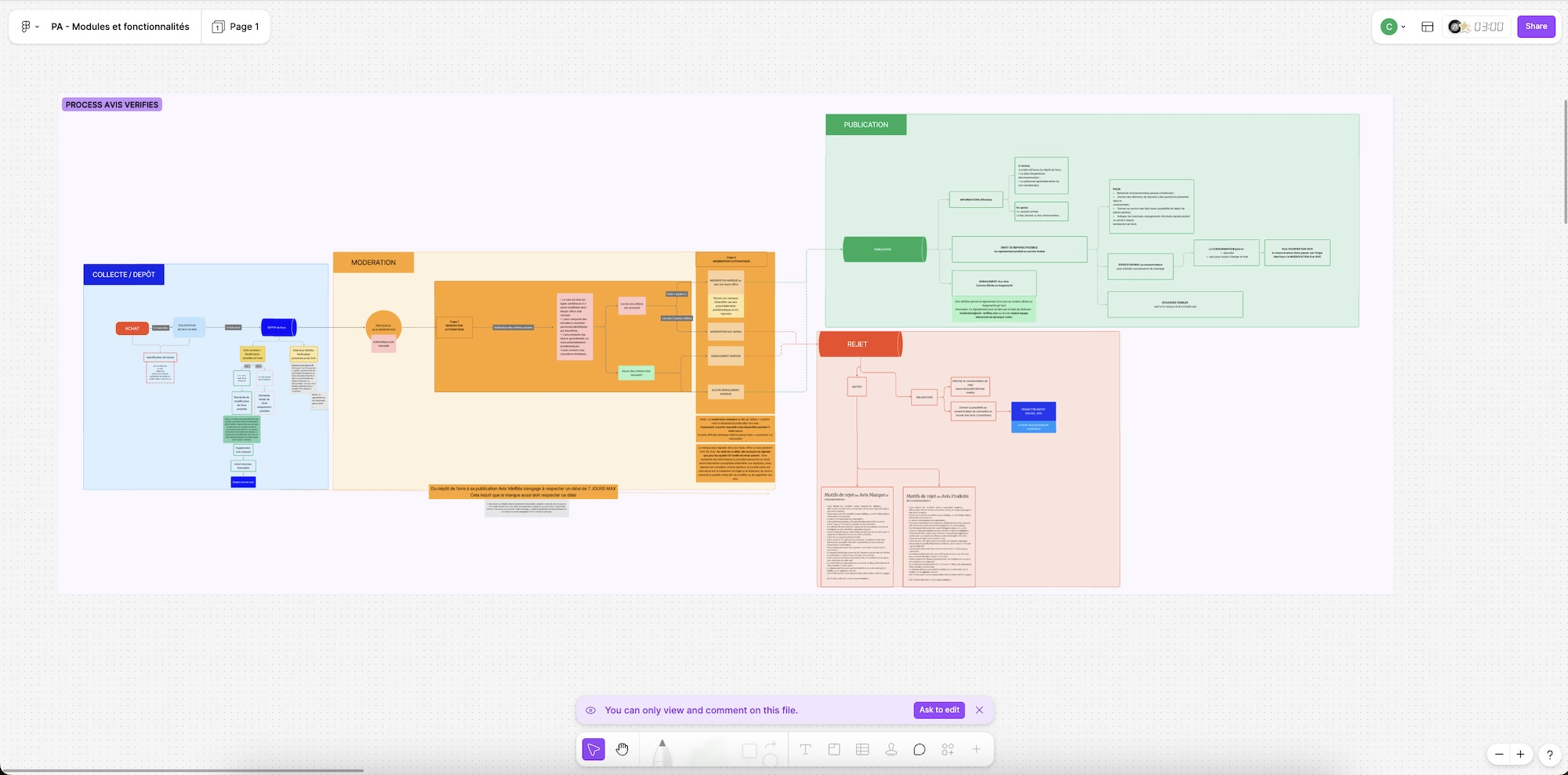
Design activities on Figjam
Preliminary functional and technical study were carried out.
We used Figjam to model the expected features of the software, as well as the architecture of the moderation block and its related modules.
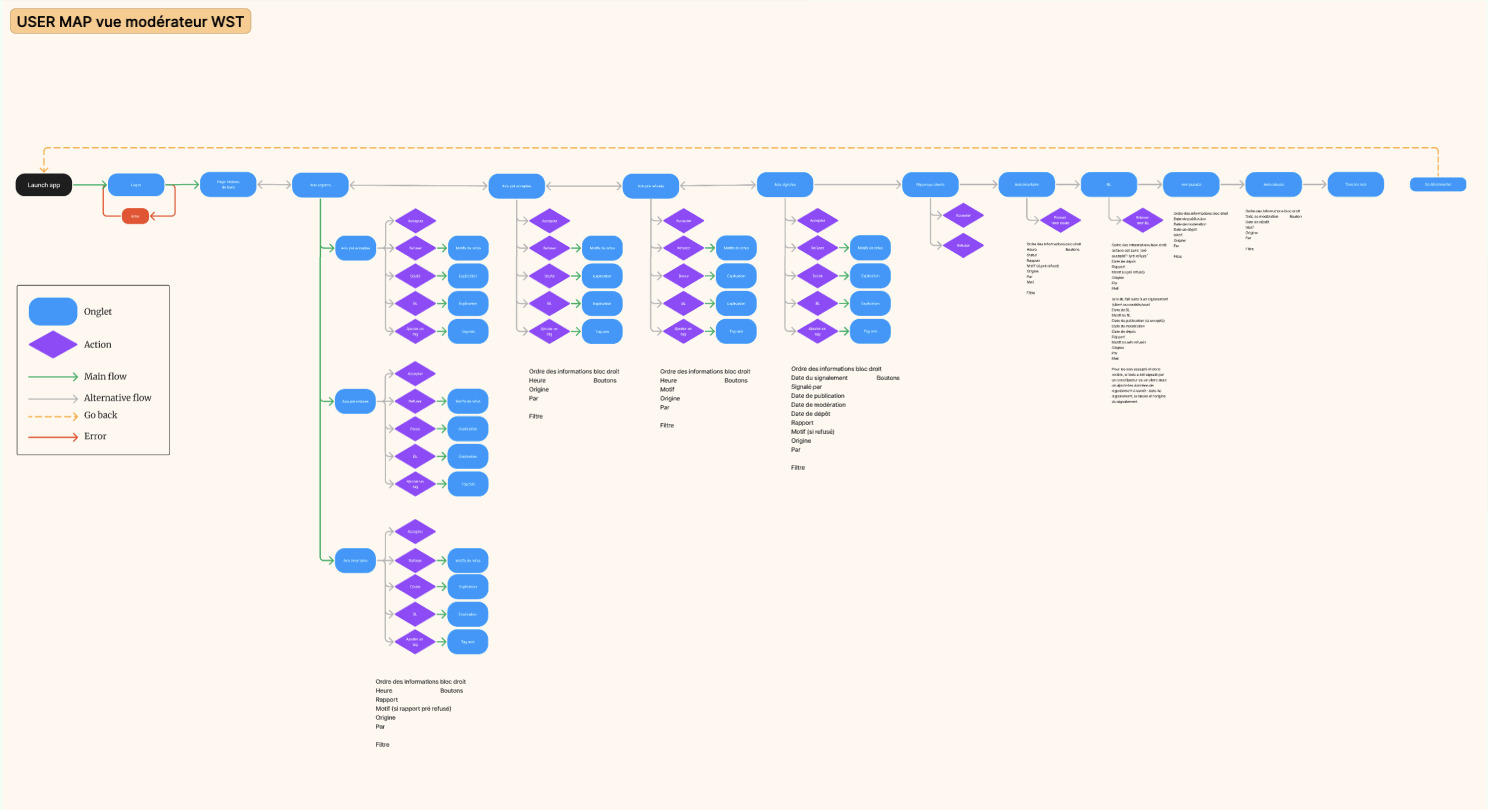
The user map modeling allowed us to:
- Understanding the user journey: gaining a clear and unified view of the user experience in order to identify pain points and needs.
- Improving the experience: identifying opportunities for improvement or innovation to make the journey smoother and more satisfying.
- Aligning teams: ensuring that all team members (developers, designers, marketing, etc.) share a common understanding of the customer experience.
- Guiding decisions: helping prioritize the development of new features or interface improvements based on real user needs.
User map modeling: a visual and chronological representation of the user’s experience during their expected interaction with the product.
The preliminary study helped to identify the main user groups, generate personas, and determine the key needs for each user profile.
- The Moderator: responsible for moderating comments within the interface and maintaining a low volume of comments to review, while respecting legal deadlines.
- The Key Account Manager: responsible for the client account. They supervise the moderator’s work, have validation authority, and benefit from broader access within the interface.
- The End Client (e-merchant): in order to monitor their brand reputation, they have the right to review and flag comments that do not comply with legal standards.
- The Buyer - who provides the data by leaving a comment on a purchased and used product.
This user does not have direct access to the interface, but actions taken within the interface may lead to consequences — such as blacklisting — in cases where a comment violates applicable standards.
Low to high fidelity mock-up design activities
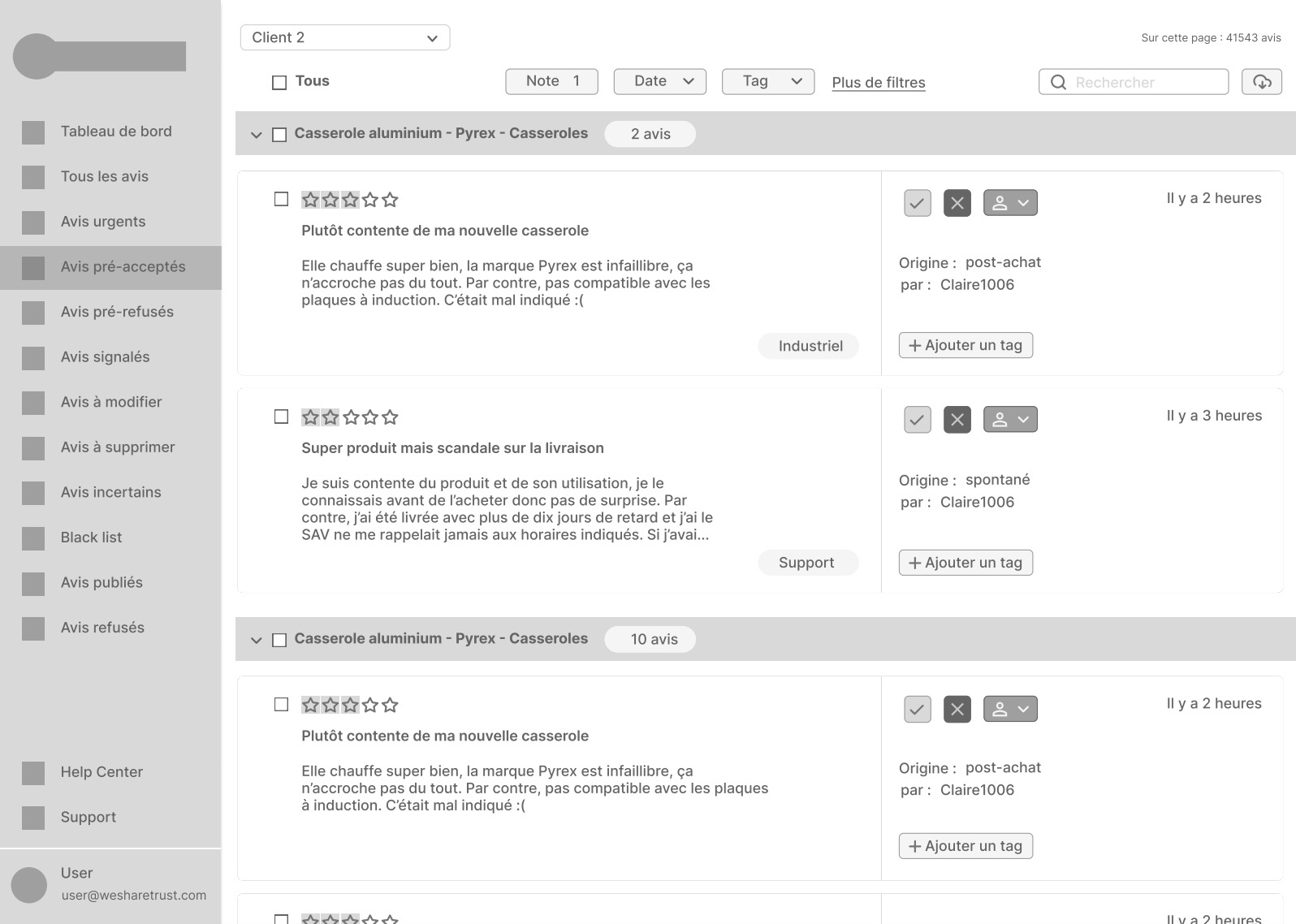
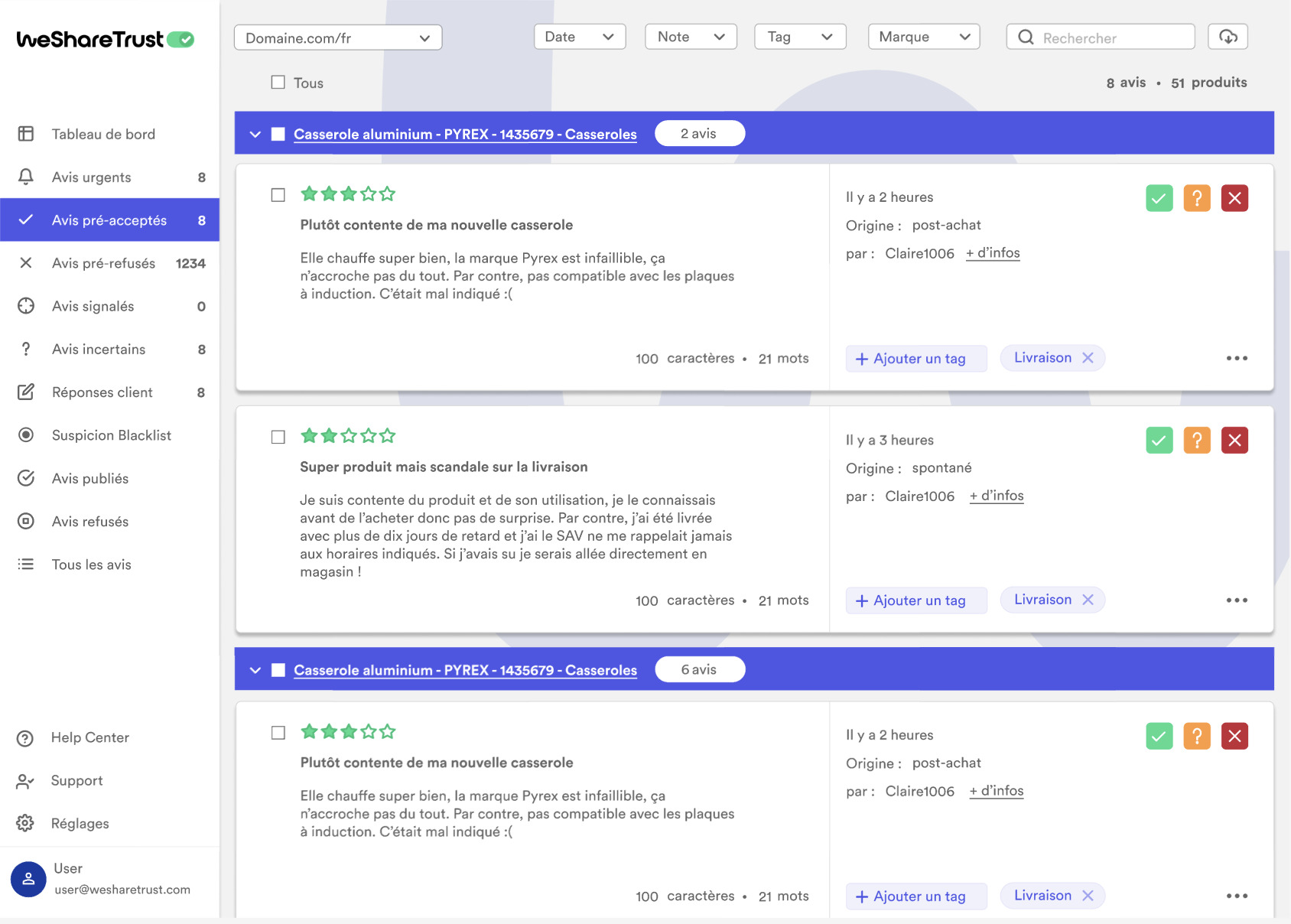
From first intention, I iterated the design towards high-fidelity mock-up on Figma.
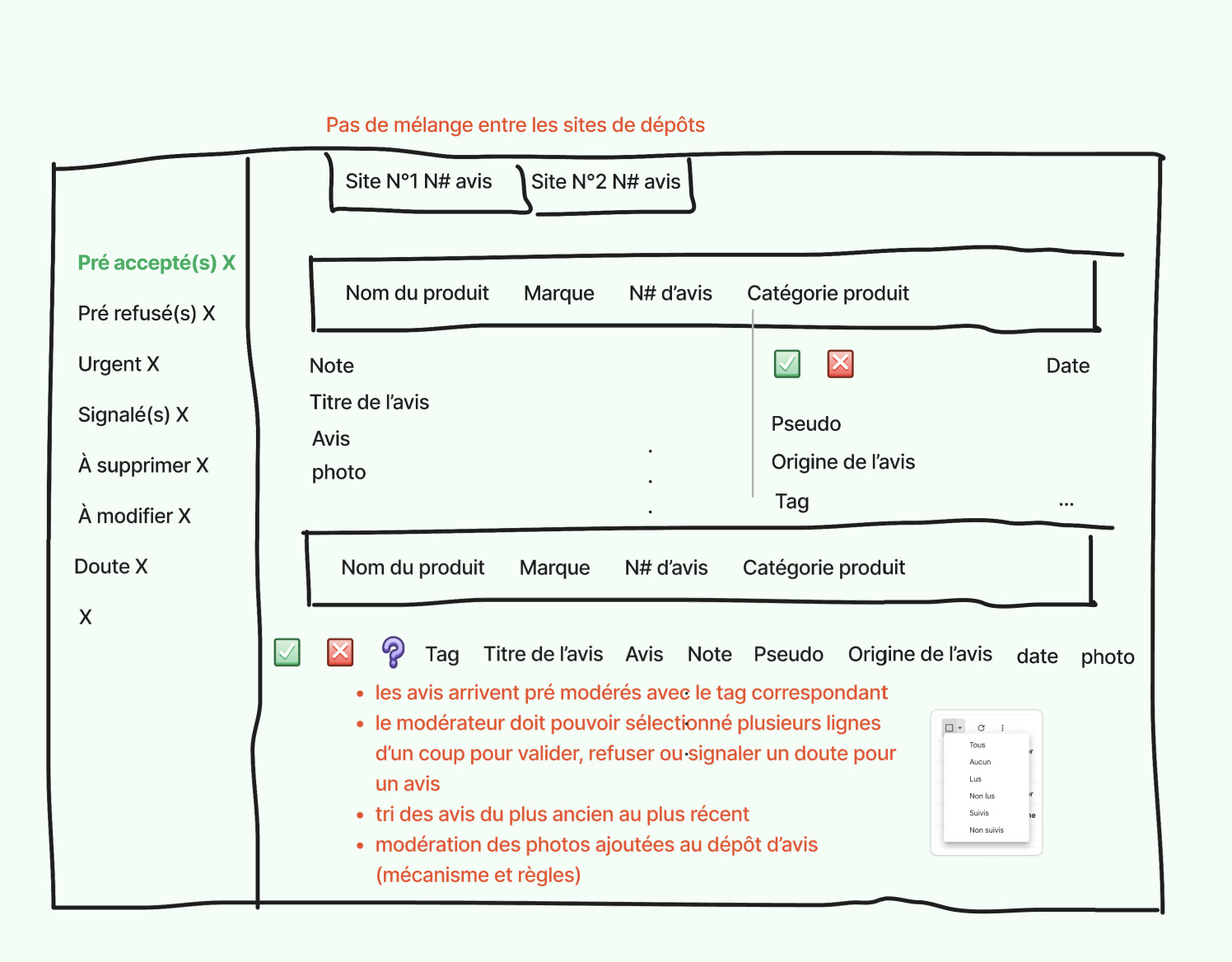
 See more wireframes →
It was then possible to produce an initial draft of the platform, then iterate toward more realistic versions that took both technical and user constraints into account.
Thanks to efficient organization, we were able to validate functional intentions, decline views and start building the first prototypes.
Artificial Intelligence feature integration
Artificial Intelligence have made it possible to integrate, upstream of the manual moderation process, an automatic moderation feature based on the application of a rejection criterion - following the criterias defined by law.
This significantly reduces the volume of incoming data and decreases both the workload and the time-consuming nature of the tasks performed by users such as Moderators and Key Account Managers.
Design system creation
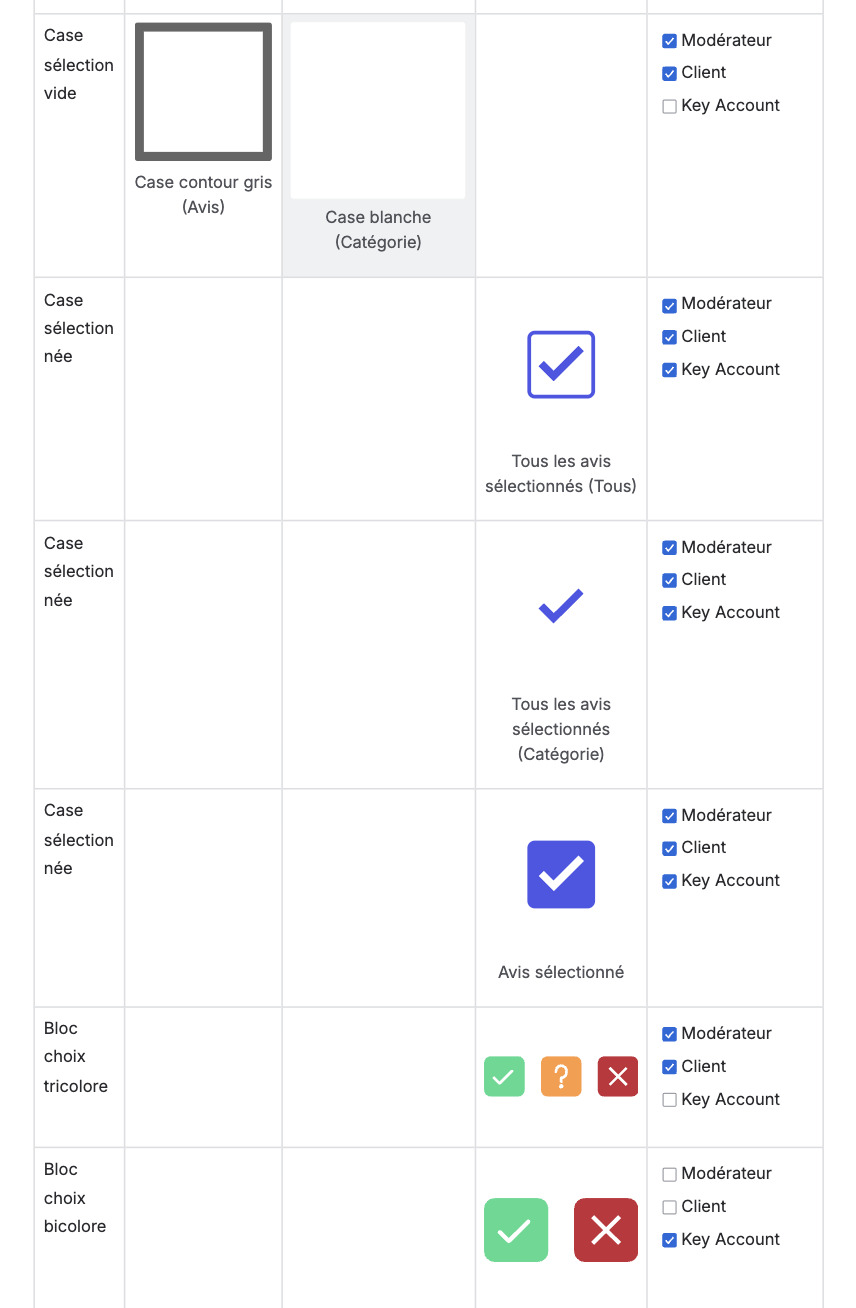
I developed a comprehensive design system aimed at improving consistency, efficiency, and scalability across all digital products. The main objectives were to unify the visual identity, streamline the design and development process, and enhance collaboration between designers and developers.
To achieve these goals, I audited existing interfaces, identified recurring patterns, and established a set of reusable UI components and design tokens (colors, typography, spacing, etc.). I documented guidelines and best practices to ensure accessibility, responsiveness, and brand coherence.
Prototyping and User testing on Figma
Over 80 prototypes were built throughout the project.
To better guide technical teams, I designed interactive prototypes on Figma focusing on the platform’s key features.
Prototypes helped to:
- Visualize user flows and system interactions.
- Create user scenarios for tests allowed to better understand how they interacted with the system and to validate the usability and ergonomics of the interface.
- Collect consistent and constructive feedback.
- Refine design and implement necessary improvements.
For example, certain buttons — particularly within the blacklisting process (for managing blacklisted users) — were redesigned to better match the realistic workflows of the moderator user group.
The final mockups were completed and adjusted and submitted for validation before moving forward with the next stages of development and the creation of additional views and features.
Technical documentation writing
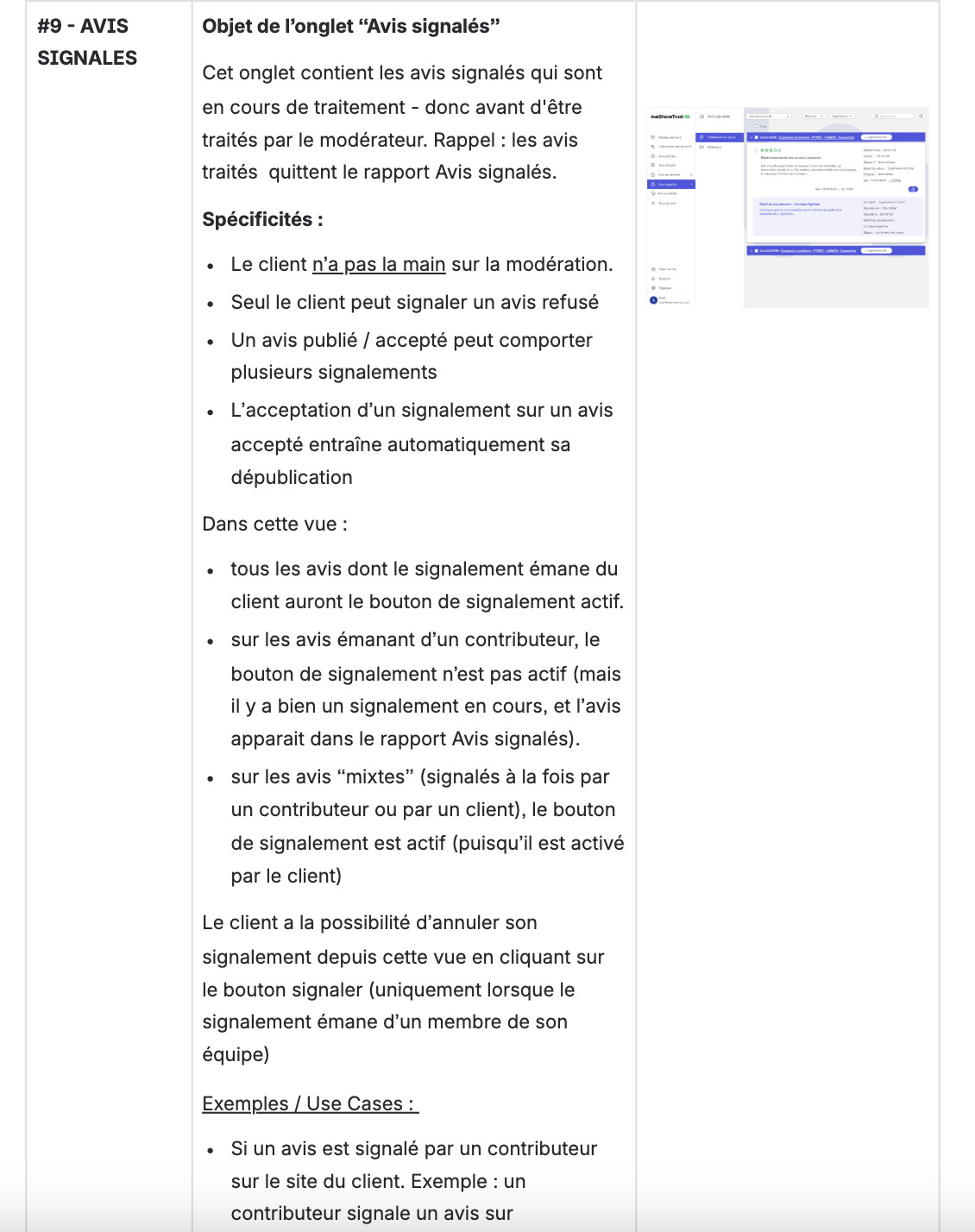
I delivered a detailed technical documentation covering all the views and components developed during the project.
This documentation was created to ensure a clear and consistent understanding of the design system, user flows, and interaction logic among all team members. It served as a reference guide for developers during implementation and helped maintain alignment between the design intentions and the final product.
Additionally, it facilitated future updates and scalability by providing a structured and easily accessible overview of the platform’s functional and visual specifications.
To be easily shared and read, the documentation was written on Confluence.
Deployment
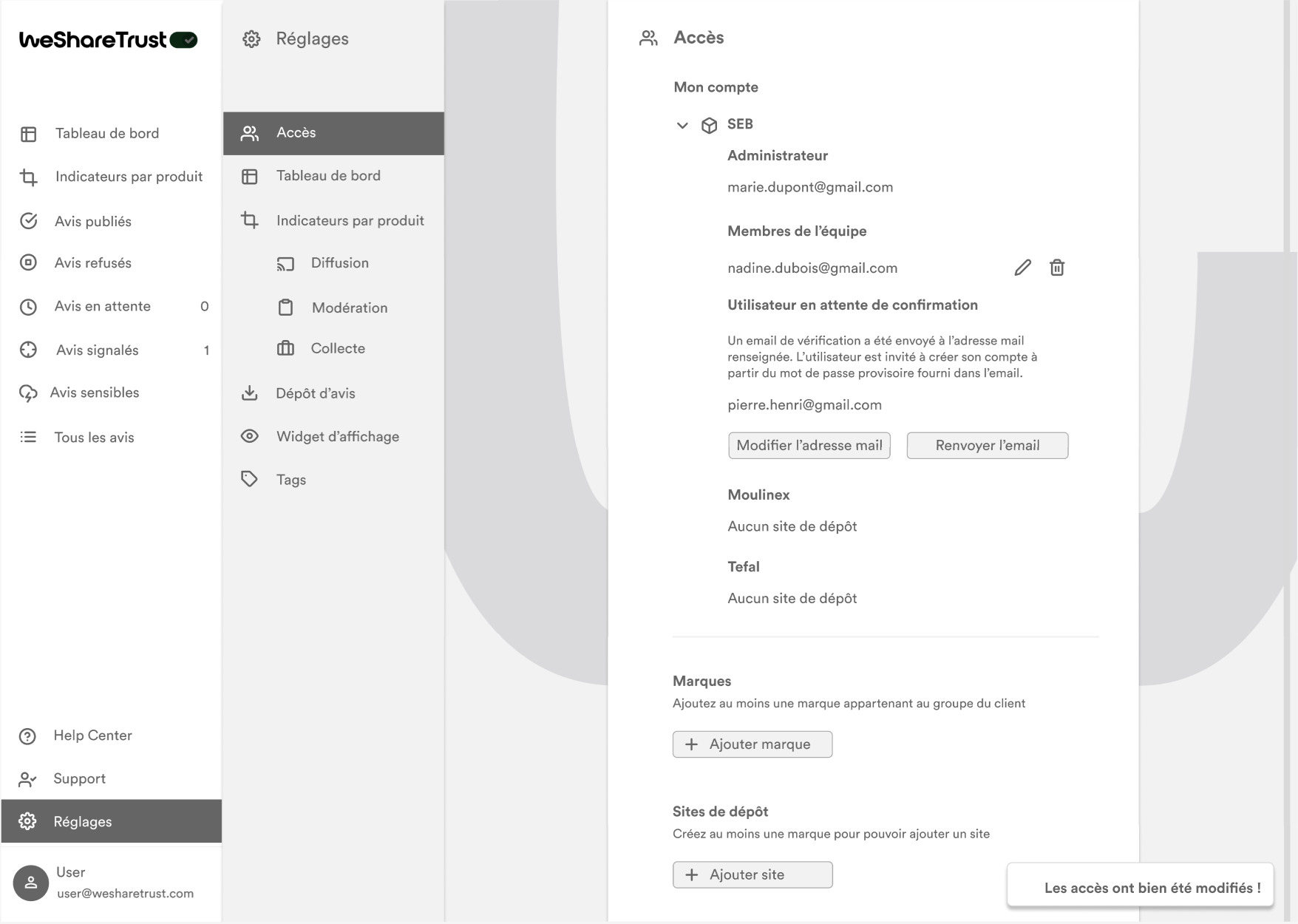
Once the design system and main views were validated, I was able to expand the scope of the project by developing additional user views and new features.
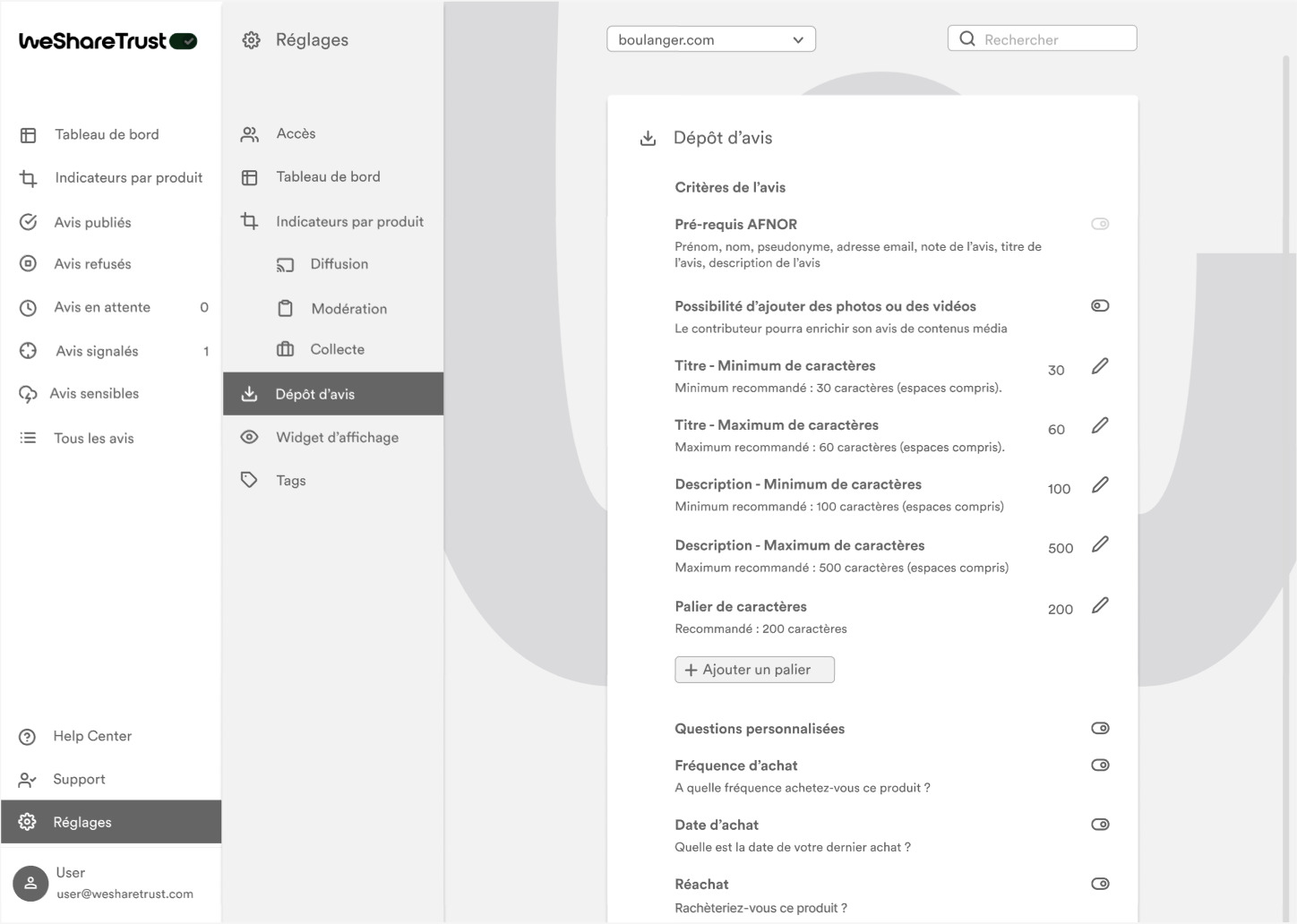
I the focused on building the back-office interface and management settings, ensuring that administrators could easily manage and customize the platform.
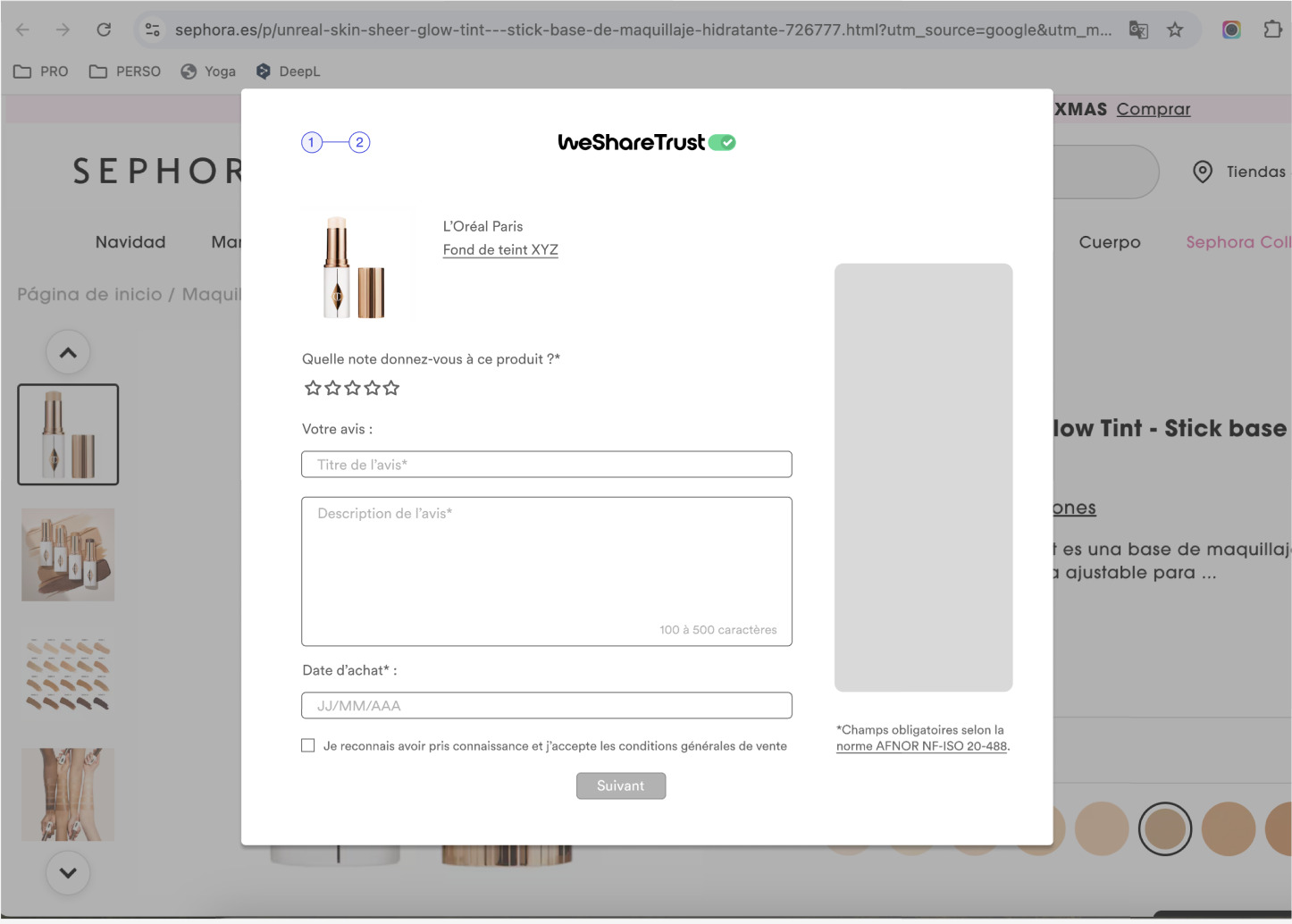
I also designed a review collection module, which allowed Buyer-type users to submit reviews.
Outcome
- Over 500 frames,
- 80 prototypes,
- detailed documentation
were delivered to the client, allowing the technical team to deploy.
This MVP has therefore been sold to clients having previously demonstrated interest to invest.
What I've learned
Throughout this project, I strengthened my ability to lead a design process from early research to high‑fidelity prototyping, learning how to translate business needs into user‑centered solutions and scalable designs.
- I gained deep experience modeling user journeys and translating them into functional interfaces, building a robust design system to ensure consistency and efficiency, and validating decisions through iterative prototyping and user testing.
- I learned ow to integrate technical and legal constraints into design thinking, work closely with cross‑functional teams, and produce detailed documentation that bridges design and development
Note: The Product Manager led prileminary activities and contributed throughout the project.
Views may contain French.